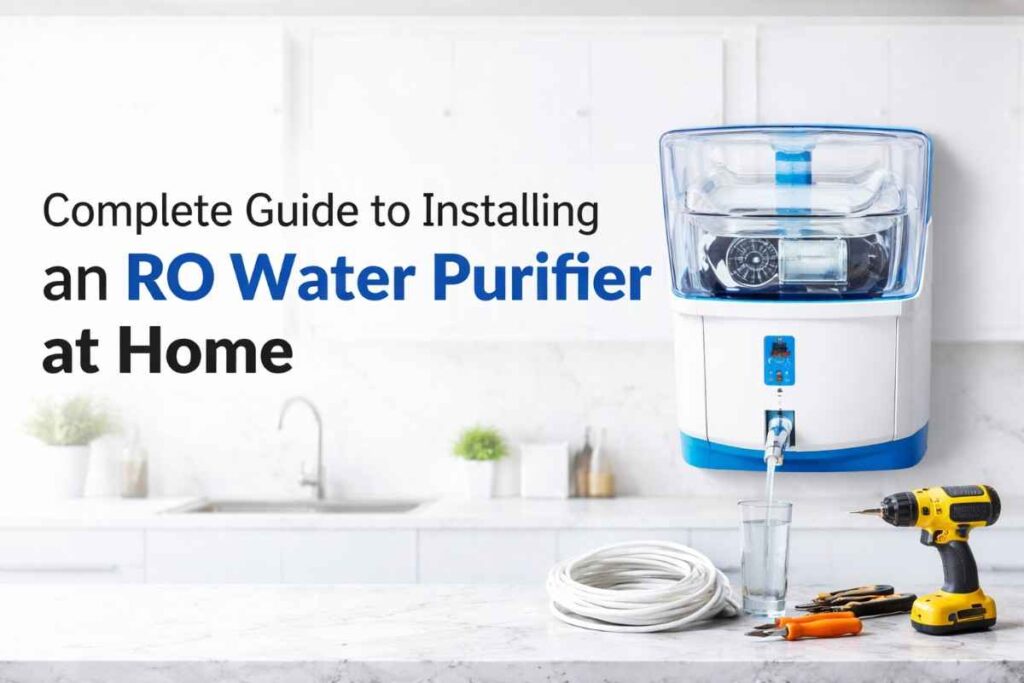
Clean and safe drinking water is essential for a healthy lifestyle. With rising water pollution, contaminated pipelines, and increasing levels of dissolved impurities, many households in India rely on RO (Reverse Osmosis) water purifiers to ensure safe drinking water. Installing an RO water purifier at home is a smart decision, but proper installation is important to make sure the system works efficiently and delivers pure water every day.
This complete guide will help you understand how to install an RO water purifier at home, what tools you need, where to place it, and important tips for maintenance.
What is an RO Water Purifier?
An RO water purifier uses a multi-stage filtration process to remove harmful contaminants, dissolved salts, heavy metals, bacteria, and chemicals from water. The system pushes water through a semi-permeable membrane that filters out impurities while allowing clean water to pass through.
Most modern RO systems include several filtration stages such as:
- Sediment filter
- Pre-carbon filter
- RO membrane
- Post-carbon filter
- UV or UF purification (in some models)
This multi-layer filtration ensures the water you drink is clean, safe, and healthy.
Benefits of Installing an RO Water Purifier at Home
Installing an RO system offers several advantages for households:
1. Removes Harmful Contaminants
RO purifiers remove dissolved salts, chemicals, arsenic, lead, and bacteria from water.
2. Improves Taste and Odor
The carbon filtration process eliminates unpleasant smells and improves the taste of water.
3. Safe Drinking Water
RO filtration provides pure and safe drinking water for your family.
4. Cost-Effective in the Long Run
Instead of buying bottled water regularly, an RO system provides purified water at home.
5. Better for Health
Purified water reduces the risk of waterborne diseases and protects your family’s health.
Things to Check Before Installing an RO Purifier
Before installing an RO purifier, check these important factors:
Water Source
Identify whether the water source is municipal supply, borewell, or tanker water.
TDS Level
RO systems are most effective when the water TDS (Total Dissolved Solids) level is high.
Water Pressure
Adequate water pressure is required for proper RO functioning.
Installation Space
Choose a clean and accessible location near a water source and power outlet.
Tools Required for RO Installation
To install an RO purifier, you may need the following tools:
- Drill machine
- Pipe cutter
- Screwdriver
- Teflon tape
- Adjustable wrench
- Water pipe connectors
Most RO systems also come with installation kits that include pipes and connectors.
Step-by-Step Guide to Install an RO Water Purifier
Step 1: Choose the Right Location
Select a place near the kitchen sink where there is access to a water supply, drainage outlet, and electrical socket.
Step 2: Mount the RO Purifier
Most RO purifiers are wall-mounted. Mark the drill points on the wall and fix the mounting screws securely.
Step 3: Connect the Water Supply
Attach the inlet pipe to the main water supply using a T-connector. Ensure the connection is tight to prevent leakage.
Step 4: Install the Drain Pipe
The RO system produces wastewater during purification. Connect the drain pipe to a nearby sink drain outlet.
Step 5: Connect the Purified Water Outlet
Fix the purified water pipe to the storage tank or faucet.
Step 6: Power Connection
Plug the purifier into a nearby electrical outlet.
Step 7: Flush the System
Run water through the purifier for 10–15 minutes before first use to flush out any impurities from new filters.
Common Installation Mistakes to Avoid
Many homeowners make mistakes during installation that can affect the purifier’s performance.
Incorrect Pipe Connections
Loose or incorrect connections can cause leakage.
Poor Drainage Setup
Improper wastewater drainage may cause water overflow.
Wrong Placement
Avoid placing the purifier in areas exposed to direct sunlight or excessive heat.
Skipping System Flush
Always flush the system before drinking the purified water.
How Often Should You Service Your RO Water Purifier?
Installing an RO purifier is only the first step. Regular maintenance is necessary to ensure optimal performance.
Typical service schedule:
- Sediment Filter: Every 6 months
- Carbon Filter: Every 6–12 months
- RO Membrane: Every 12–24 months
- Complete Servicing: Every 6 months
Regular servicing ensures better water quality and increases the lifespan of the purifier.
Signs Your RO Purifier Needs Servicing
Watch for these signs that indicate your purifier needs maintenance:
- Slow water flow
- Bad taste or odor in water
- Unusual noise from the purifier
- Water leakage
- Indicator light showing service required
Ignoring these signs can reduce purification efficiency.
Professional RO Installation vs DIY
While many people try to install RO purifiers themselves, professional installation ensures:
- Proper water pressure setup
- Correct pipe connections
- Safe electrical installation
- Efficient system performance
For homeowners searching for Best RO Services in Delhi, professional technicians can help install and maintain your purifier correctly.
Final Thoughts
Installing an RO water purifier at home is one of the best steps you can take to ensure safe drinking water for your family. However, proper installation and regular maintenance are essential for the purifier to work efficiently. By following the right installation steps and scheduling routine servicing, you can enjoy clean, safe, and healthy drinking water every day.
If you are unsure about installation or maintenance, it is always recommended to hire professional RO technicians who can ensure your system is installed correctly and operates at peak performance.